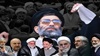
These are not passing remarks, nor are they a media maneuver… When Netanyahu openly declares that he has instructed the military and Mossad to overthrow the Iranian regime, and when information revealed by The New York Times indicates that U.S. Central Command has prepared an expanded list of targets and is awaiting the order to proceed, we are witnessing a moment in which the final page is being written in a chapter whose events began on October 7, 2023.
We said it from day one: the objective was to redraw the maps of the region and clip Iran’s claws in preparation for dismantling its ruling regime.
Gaza was not the end, nor was Lebanon, Yemen, or Syria. They were all stops along a single road: the road to dismantling the regime’s proxies before reaching the head itself. Everything that has unfolded over the past three years has been nothing more than setting the stage and buying time until the moment was ripe.
And today, Netanyahu says it in his own words: striking nuclear facilities is not enough; the solution is to overthrow the regime.
But the question here is not whether the rule of the mullahs will actually fall. Rather, it is: What will the price be, and who will pay it?
The Gulf is not a mere spectator in this confrontation; it lies directly in the line of fire. We saw during last February’s war how missiles and drones reached Manama, Kuwait, Abu Dhabi, and Riyadh. Today, Tehran is drawing up its own lists of targets, foremost among them energy facilities, infrastructure, and water desalination plants in countries allied with Washington. A regime that feels itself being pushed to the brink does not think according to the logic of statehood, but rather according to the logic of “Samson, who brought the temple crashing down upon himself and his enemies.” Herein lies the greatest danger: that the hour of the regime’s collapse could become an hour of sweeping regional vengeance.
And what comes after the fall? Will we see a new, stable Iran, or an armed power vacuum in a country of ninety million people? The Iraqi, Libyan, and Syrian experiences remain vividly before our eyes: overthrowing regimes is easy, but building what comes afterward is the dilemma for which the region has paid the price for decades.
And let us pay attention, ladies and gentlemen, to the timing: Netanyahu is escalating his rhetoric just hours before decisive Israeli elections in which the two sides—his camp and that of his opponents—are evenly matched, while Washington is discussing plans for the period following its midterm elections. War here is not merely a military decision; it is also a political card played at the ballot box. This makes the present moment all the more dangerous and delicate, because when decisions of war become entangled with calculations of political survival, the region finds itself held hostage to maneuvers imposed upon it from beyond its borders.
Put simply: the maps are being redrawn, and whoever lacks a vision of their own will find themselves reduced to a mere line on a map drawn by others. The coming days are pregnant with answers to every question… but those answers will come at a price paid by the peoples of the region before their regimes.